
The AI slopification of the Singaporean Internet
The AI slopification of Singapore is emblematic of one of the most Singaporean of feelings: apathy and indifference.


In April, I wrote a story about the internet restrictions faced by domestic workers in Singapore in a story headlined: ‘Not allowed to use the home Wi-Fi’: How domestic workers get online in Singapore.
TL;DR: Singapore is one of the most connected countries in the world (there are more wireless broadband subscriptions than there are people). However, connectivity is an entirely different story for the around 300,000 domestic workers who face restrictions like being barred from using the home WiFi, having their devices confiscated, or being asked to install tracking software.
A few days later, a maid agency appears to have used AI to convert this story into promotional copy for its own services.
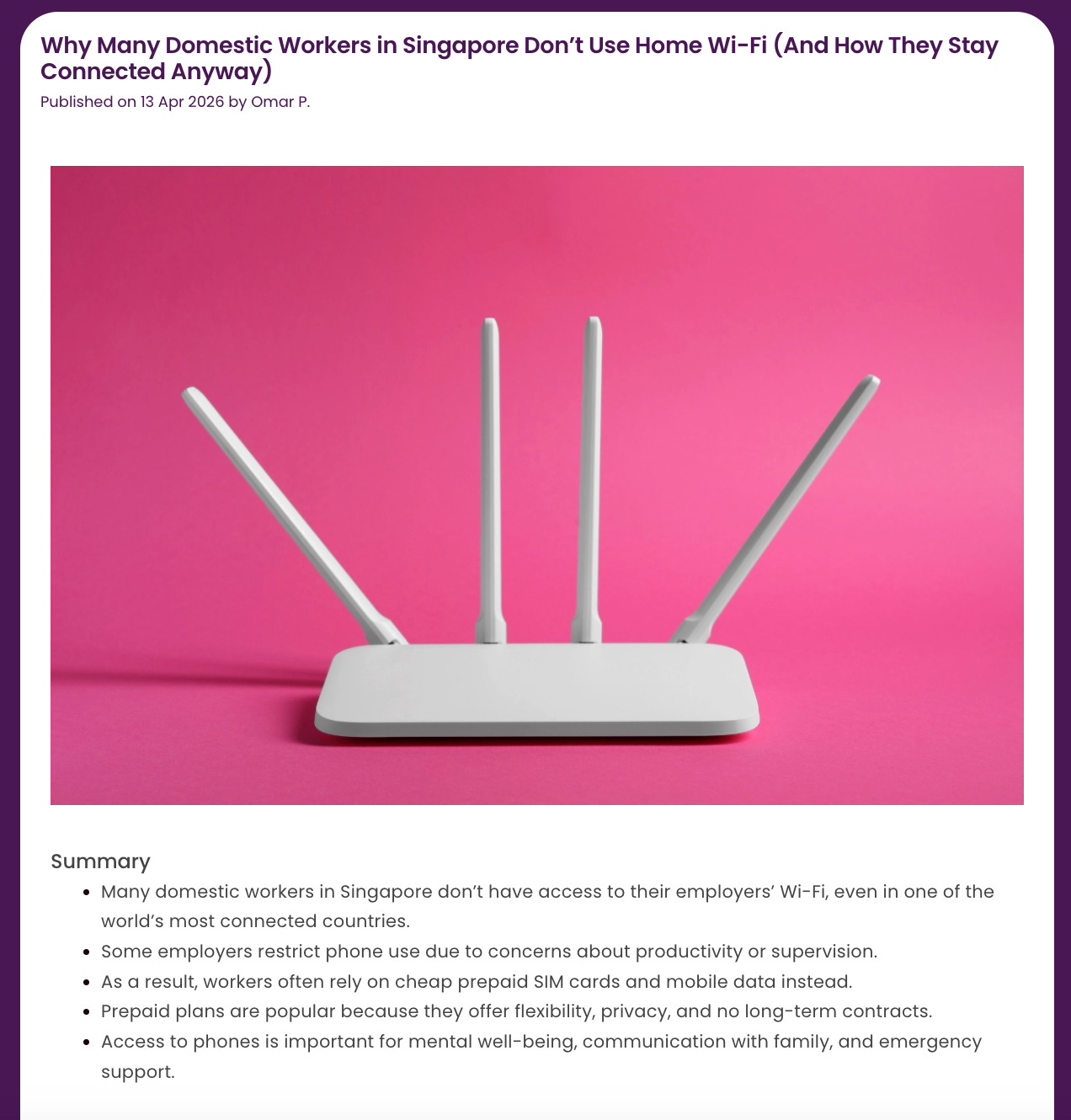
The original work was not credited. And the human voices I’d interviewed were stripped away to create generic bullet points, some of it justifying why it might make sense to deny your domestic worker access to WiFi.
Sadly, this sort of thing isn’t unusual anymore.
The rise of Singapore slop
Just a month before, Singapore Esquire made global headlines for creating an AI-generated interview with the star of the Netflix live-action One Piece series, Mackenyu, when he wasn’t available for an actual interview.
The motivation was both strikingly commercial and creatively lazy:
We had the photospread, but nothing directly uttered by the 29-year-old. With a driving need for a feature, we had to be inventive. Harnessing our creative license, we pulled his verbatim from previous interviews and fed them through an AI programme to formulate new responses.
Are these the words we expect from Mackenyu? Or are they just replies from an echo chamber of celebrity-hood that we want to believe is from him?
The result is an AI Mackenyu who creates generic platitudes about fatherhood and the importance of drawing boundaries at work, as well as fabricated anecdotes about his father and dog.
Intense backlash aside, what I find most hilarious about the Esquire interview is that its author also wrote an opinion piece in January titled: “Unpopular Opinion: We Can’t Game The System. The cliché is right, good things do take time.”
There’s a reason the word after “Get Rich Quick” is “Scheme”. We innately know there’s no such thing as a free lunch, yet we still want to believe a shortcut to success exists. One that is easy and, impossibly still, moral. It’s not surprising in an age when almost everything can be outsourced.
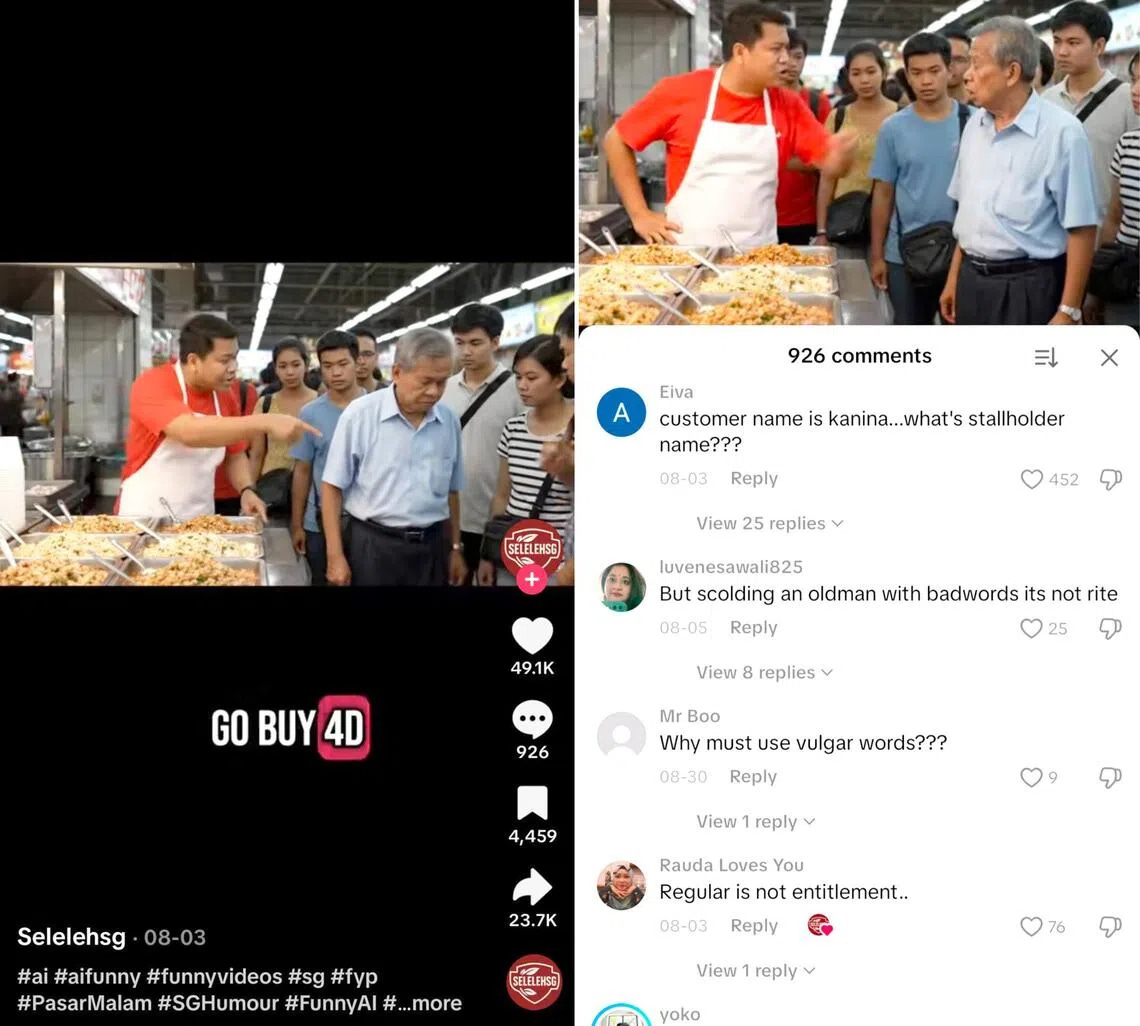
This Esquire interview is just the latest manifestation in the mainstreaming of AI slop in Singapore, a country that has long been an early adopter of very questionable uses of the technology.
Last year, I reported on the growing trend of AI-generated slop being used for love scams targeting users in Singapore. All of this is part of a growing flood of AI-generated inauthentic material that is clogging up TikTok feeds and popular Singapore Facebook groups.
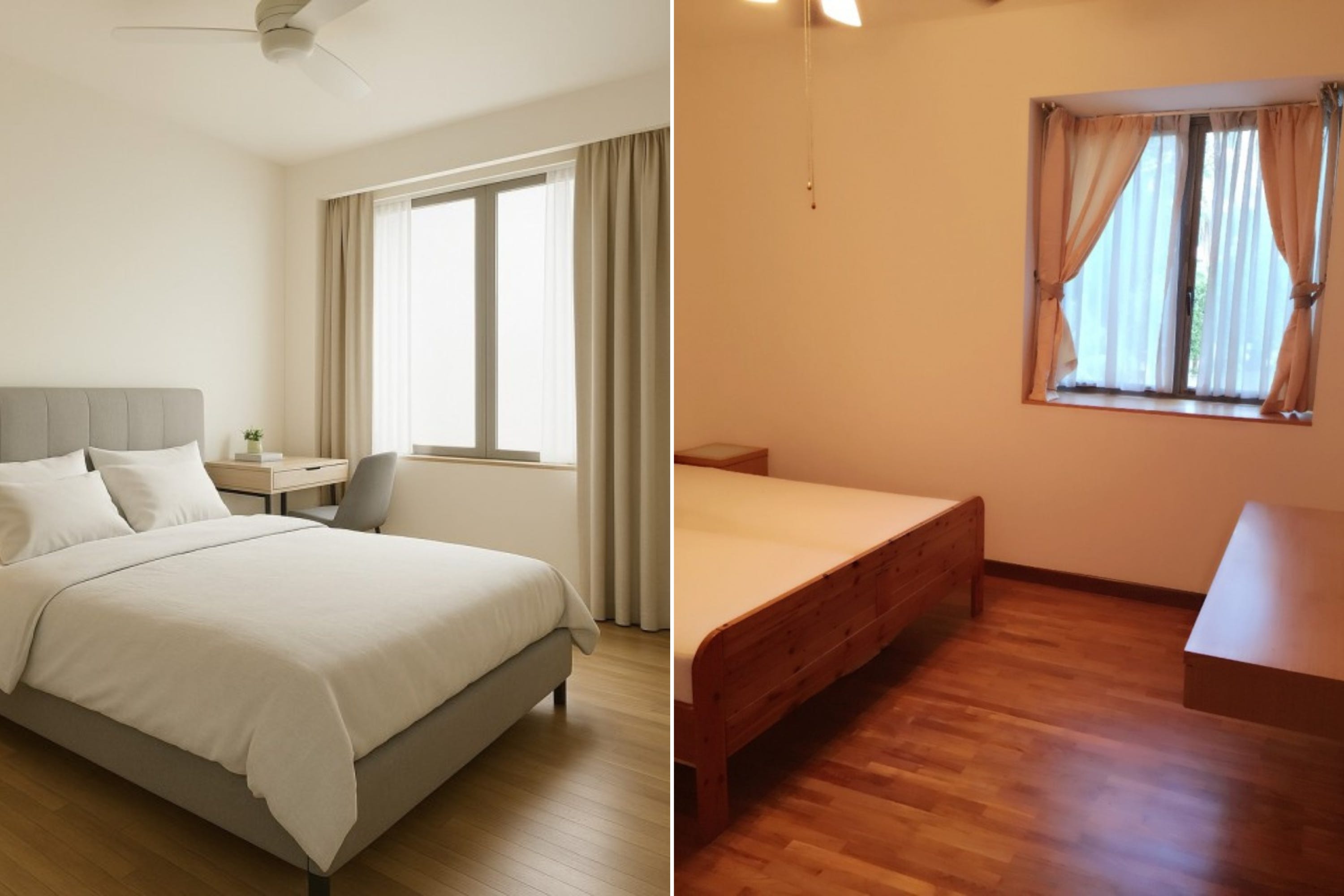
At around the same time, I also reported on a trend of property agents using deceptive AI-generated images for their property listings, often in reality-bending ways that could never work in that particular space.
I’m far from alone in noticing this. Social media is chock full of users expressing surprise at how widespread AI-generated slop has become, regardless of how appropriate it is for the context.
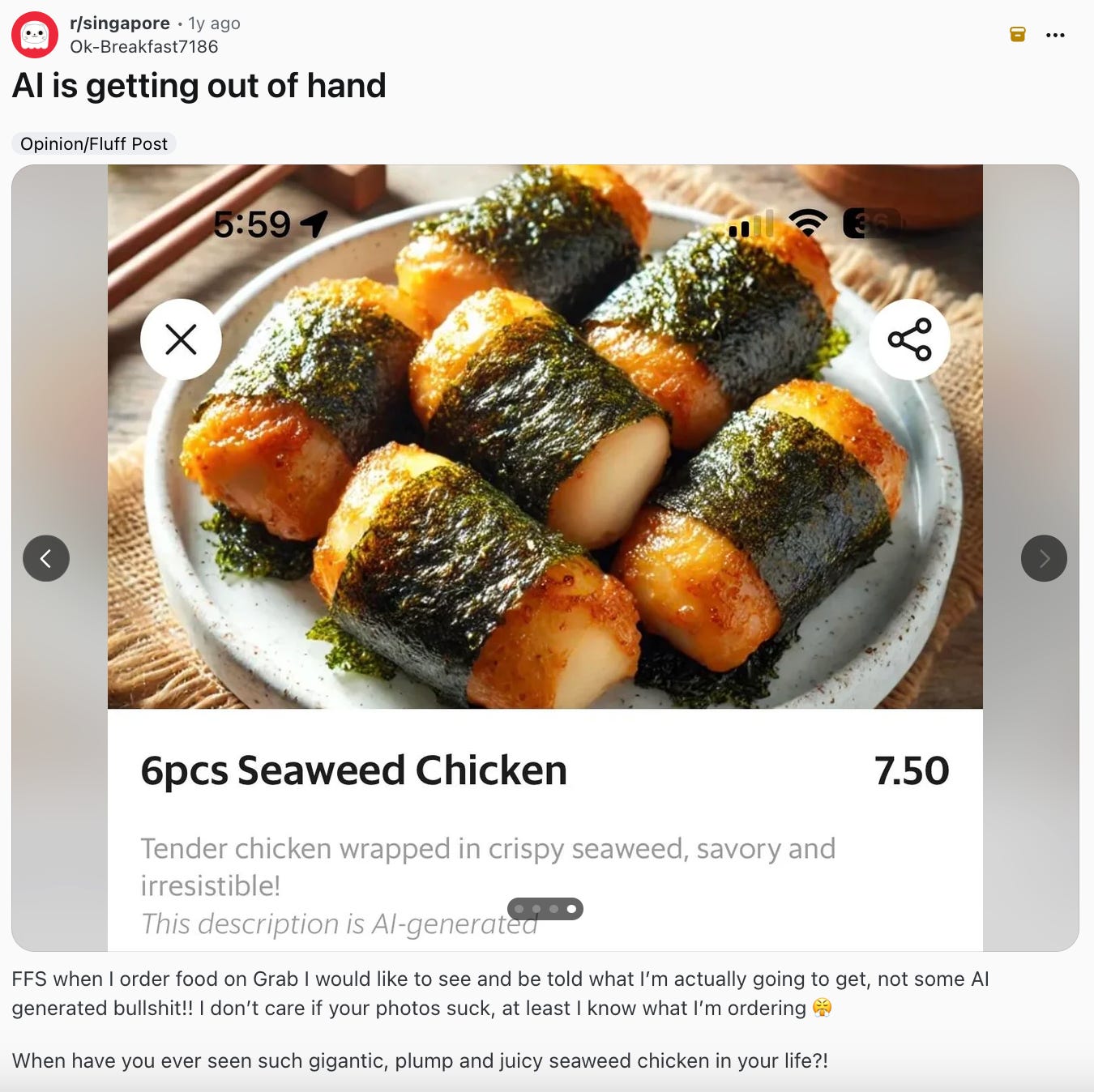
On Reddit, users express disbelief at food delivery app Grab’s use of disturbing and not at all flattering AI-generated images and descriptions for menu items. As this poster writes: “When have you ever seen such gigantic, plump and juicy seaweed chicken in your life?!”
 Tiktok failed to load.
Enable 3rd party cookies or use another browser
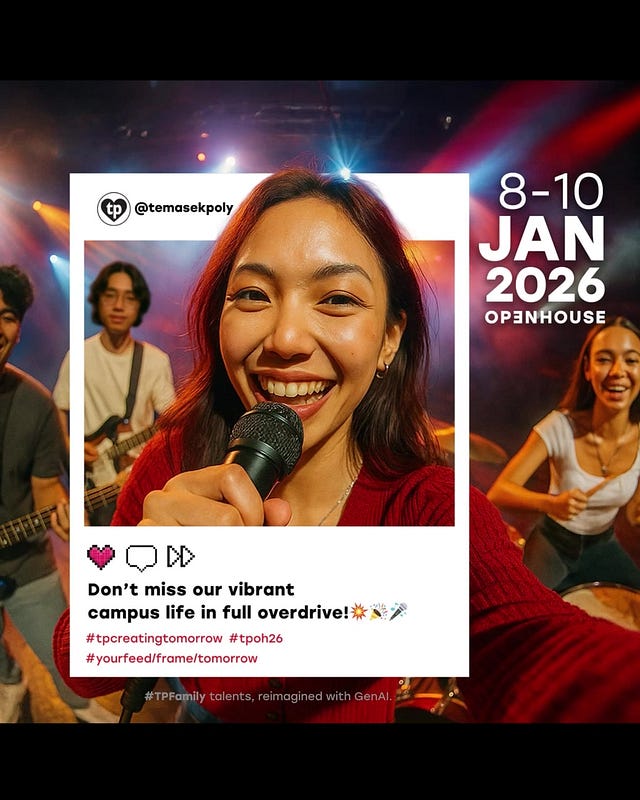
Earlier this year, polytechnic students were outraged when their schools turned to AI to create images and videos of students for their open houses for prospective students.
Many of these students rightly pointed out that such content should reflect “real students and real campus culture”, and that one could easily have turned to their schools’ many design students for better and more interesting output.
Apathy + Money = Slop
Everyone, including the author of the ill-fated Esquire interview, seems to understand that good things do take time, effort, and intentionality. So why is everyone – from your faceless big tech corporation to your unfriendly neighbourhood property agent – embracing such obviously slipshod AI-generated content?
A common strand in all the AI-generated slop scandals that I’ve noticed is how financial interest overlaps with not actually caring about the thing.
Generative AI becomes an easy way to check a box and say you did a thing that you don’t actually care about. Far from being the productivity enhancer that AI boosters say it is, AI more resembles an ultimate assistant for bullshit jobs that nobody wants to do.
As I’ve previously reported, agents and experts say what’s driving the use of AI-generated images in property listings is that there is often no budget for staging and sprucing up a space, making an image you can generate in under a minute an easy alternative.
Tech corporations’ financial motives are also intertwined with the rise of AI slop. A 2025 Reuters report found that Meta’s internal research estimates their platforms are involved in a third of all successful scams in the US – and that around 10 per cent of the company’s 2024 annual revenue comes from running advertisements for scams and banned goods.
When profit and engagement are the only metrics, is it any wonder then that so many industries are turning a blind eye to slop, even when it’s so obviously being used to deceive?
For all the public outcry over AI-generated property listings, marketing campaigns, and content in general, that controversy tends to fizzle out into a collective shrug.
Meta did not respond to my request for comments about the inauthentic material that I found on its platforms. However, after the story’s publication, a representative of the public relations firm retained by the company reached out to question my story referencing the above-mentioned Reuters investigation. Still no comment on the AI-generated fakery though.
PropertyGuru, a platform I reached out to over their AI-generated images in property listings, had a better response and removed the images I flagged. However, such imagery appeared to still be present without disclosure when I examined the platform weeks later.
This lack of meaningful consequences is part of why AI slop persists.
Those hoping that regulatory oversight might curb the flood of AI slop will be left wanting, because the government was an early mover in the AI slop domain.

In 2024, the Ministry of Finance made the brow-raising move to use “ugly” AI-generated images that are ”filled with errors” as part of a campaign promoting benefits for lower-income couples with children.
More recently, netizens were critical of a Public Utilities Board campaign which appeared to use imagery with artifacts indicative of AI generation. “Even govt departments dont want to support local talent,” writes one user in response.
In November, and in response to a parliamentary question about the need for clear disclosure of AI-generated images that make representation about products and services, Minister for Trade and Industry Gan Kim Yong writes:
“The Consumer Protection (Fair Trading) Act protects consumers against businesses that make misleading or false claims about their products or services, whether or not they are AI-generated. There are currently no plans to introduce specific disclosure requirements or labelling standards for AI-generated content of products and services.”
To be clear, I’m not sure that disclosure alone is the solution here. Much of the AI slop that’s out there is self-evidently awful. Part of the issue surrounding slop is that nobody seems to care how awful it is, even with adequate disclosure.
Really, the AI slopification of Singapore is emblematic of one of the most Singaporean of feelings: apathy and indifference. Nobody cares as long as they’re still getting paid.
To me, this song is surprisingly apt at summing up how this all feels: