

To say that Singaporeans are overly sensitive when it comes to criticism is an understatement. And nowhere is this more apparent than in the realm of food reviews and criticism.
When a TikTok creator started a video series “exposing” hawkers recommended by the Michelin guide (but mostly giving them a 7/10 rating if he did not like them), it kicked off a firestorm of criticism from netizens who slammed him for potentially damaging the livelihoods of these hawkers.
In Singapore’s broad spectrum of food blogs and content creators, food criticism is mostly about price worthiness and “authenticity”, and less so about comparison and actual criticism. In many cases, the worst insult a creator or journalist has is that a restaurant may still be worth it if there is no queue.
None of this holds true for Jaime Ee, lifestyle editor of The Business Times, a prolific food reviewer for whom no picture of their face exists online. I hereby refer to them as they (singular), as even their gender is unknown to me (and I would rather not ask).
Jaime does not mince words. Take this opening line to their review of Spanish tapas restaurant Binomio: “The new Binomio is a classic example of how far Spanish cuisine has come in Singapore. As in, not very far.”
Later in the review, they write: “There’s little character to speak of at Binomio, which dishes out food with the efficiency of a hardworking chef who hasn’t had a hug in a long time.”
I’ll have what they’re having.
Why bad reviews are rare in Singapore
There are many structural reasons for why food criticism in Singapore is rarely so scathing.
For one, Singapore’s news outlets typically do not pay for these meals, creating a reliance on fostering good relationships with restaurants (and their PR agencies) to even access them unless your journalist is independently wealthy.
Most local journalists are not independently wealthy, and this is obviously less of an issue when the food isn’t pricey (notice how the TikTok creator was “exposing” Michelin recommended hawker stalls, not restaurants).
Worse, it’s often pay to play. It’s an open secret that many of Singapore’s food blogs receive payment from restaurants to write their food reviews – making bad reviews an often pointless and profitless exercise. A similar dynamic exists for many foodie content creators.
And then, there’s the fact that newspapers, websites and even professional content creators no longer occupy a central space in consumers’ minds when deciding where and what to eat. That space has long ago been ceded to anonymous social media users and Google reviews.
No amount of press reviews or sponsored posts can help a restaurant escape the verdict of having just 3 out of 5 stars on Google reviews. Or, when they provoke a slew of negative but organic TikTok posts by angry consumers.
In many ways, these public reviews have come to replace food criticism as a way of sifting out places that aren’t worth eating at.
All of this makes Jaime Ee’s unusually tough love all the more fascinating to read.
As such, I’ve compiled my favourite of their reviews from 2025 (though I’d also encourage you to read the original linked reviews in full if you’re interested):
9. “The best way to enjoy your meal at Violet Oon’s is to not think about the food. At all.”
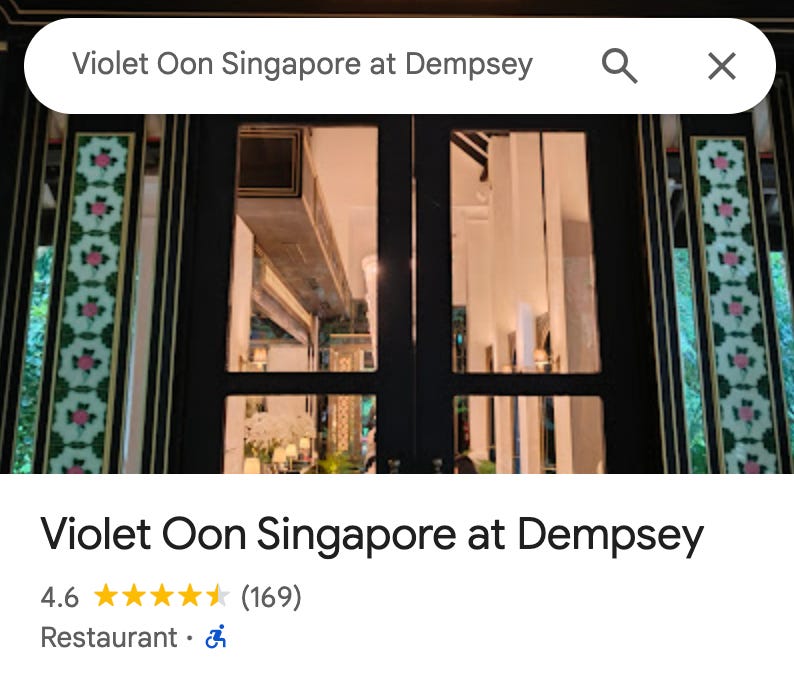
This review of Violent Oon’s new Dempsey Hill outlet continues:
Go with other people. Friends. Lovers. Start a quarrel. Propose. OK, maybe don’t do that. Gossip. Anything but scrutinise what you’re eating. (...)
With down-to-earth pricing, pleasant and polished service and an easy-going ambience, it’s not hard to like. It’s perfect for a gathering of aunties, for family dinners, people of varying levels of importance, anything. But the key is just that – a place to gather, with food. Not for it. (...)
We can’t say the same about fuyong hai crab (S$24), a sopping wet omelette crowned with crabmeat that’s on the fast track to being not fresh. Now, we’ve always believed that eggs can do no wrong, but this is scrambled beyond redemption. OK, belacan helps a bit. (...)
No excuses for the dry laksa (S$29), which we remember from years back as one of our favourites. Not any more. It looks like it, smells like it, but between the under-fried dried shrimp and stodgy noodles, taste found an escape route and ran off to Tanglin Halt.
8. “Like annoying five-year-olds, we can’t stop asking “Why?”. Why is the mid-section of the wing stuffed with chicken rice infused with vinegar, and why complicate it further with char siew marinated drumettes?”
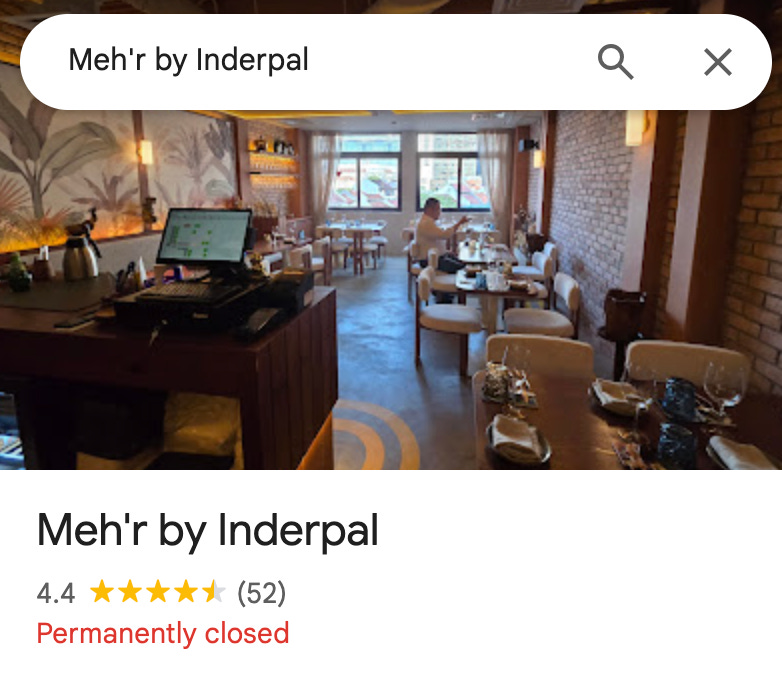
The most creative food review I’ve read this year comes from Jaime Ee comparing a meal at Meh’r by Inderpal to a lover who’s trying way too hard:
We’re sorry. We tried, but we don’t think it’s going to work out. It’s not them, it’s us. We don’t deserve them. We can’t keep up with the energy of one who takes Indian food on a merry spin through the rest of Asia and shows no sign of stopping. Satay sauce without peanuts? No, no. Not for us. Made with digestive biscuits? That actually sounds traumatic. Not to mention eating beetroot-coloured thosai and sardines. (...)
First up is satay merah jambu (S$22), with its promise of chargrilled pink oyster mushroom, satay sauce and rice cakes. Yes, we get that it might be designed for vegetarians with nut allergies, but being of neither persuasion, we resent that we’re eating damp, squishy mushrooms dipped in a chilli-onion relish thickened with cookie crumbs. (...)
But like an overzealous date, Meh’r by Inderpal tries too hard, and uses every trick in the book in the hope that something sticks. It’s purple prose in dire need of brutal editing; it’s the lack of understanding that this is not a competition, so chill. (...)
Laksa fish (S$42) is another case of self-restraint thrown out the window, as saffron-coloured halibut is poached and served in a laksa sauce, layered with potato puree, fried vermicelli, dried shrimp sambal and anything else within reach. There’s no rhyme or reason, just a random bucket of ingredients that happened to cross paths at the same time.
7. “We’ve barely settled down when two complimentary rice balls are slapped down on our table like pamphlets handed out by a guy in the MRT who can’t wait to get rid of them.”
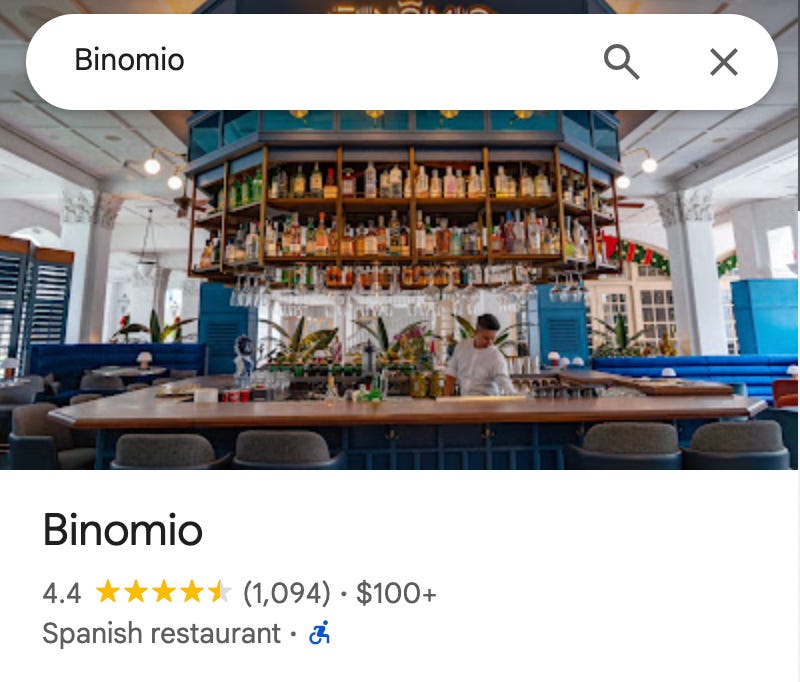
One of Jaime’s most savage reviews is directed towards Spanish eatery Binomio. After sharing its history since Binomio was first founded in 2012 amid a “Spanish fever” of new restaurants, they write:
That brings it to where it is now – a finely honed operation that’s figured out what the market wants and the price it will tolerate, but not much else. (...)
A metallic grapevine curls overhead, snaking its way around the ceiling-height see-through wine display. Clumps of “grapes” cling to the branches in case you don’t get the imagery. Maybe it’s just us, but they look a little embarrassed. (…)
Skip the lamb rack (S$38), which the server didn’t recommend and no wonder. The overcooked chops drown in a sticky sweet sauce before it can warn its sweetbread to escape this losing proposition. But they’re both caught in an uneasy alliance with aggressive goat cheese. (…)
Practice makes perfect here, but not so with the churros (S$16), which almost make it except for an oily sheen and slightly damp centre.
6. “The worst is the grated daikon that accompanies the tempura – if it’s possible to be offended by a vegetable, this feels like it. It’s so tasteless that it’s almost as if it’s thumbing its tendrils at us.”
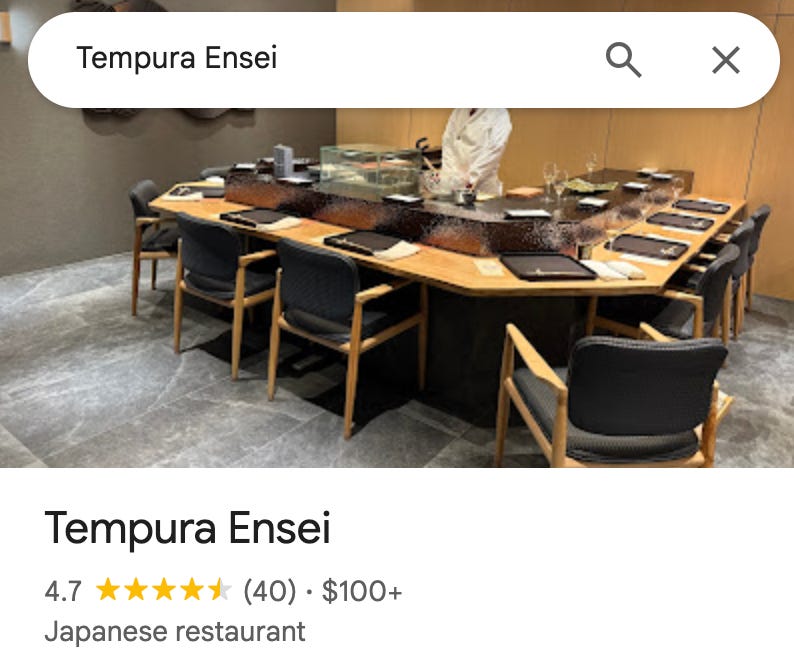
In this review of Japanese eatery Tempura Ensei, Jaime expresses frustration over a restaurant that over-promises and under-delivers when declaring that it is “bringing the art of 120-year-old, Edo-style tempura to Singapore”.
If that’s true, then what have we been eating all this while? Teenage fish fritters? (...)
Grand statements are the undoing of Tempura Ensei, which promises more than it delivers. Its public relations pitch and omakase-only pricing give you the impression that you’re getting fine-dining quality and a hinoki-counter experience. But our meal is akin to being on the restaurant floor of a Tokyo shopping mall, dining at an overpriced eatery because it’s the only one that doesn’t have a queue. (...)
The real test is, of course, the tempura, and the batter is mostly light and floppy, with an occasional satisfying crunch, and an underlying greasiness. The trick is to chomp on it at the right moment when the batter tries its darnedest to crisp up, before it decides it’s not worth the effort. (...)
Sharks’ fin tempura, on the other hand, is wasted by being doused in a sticky sauce that negates the whole point of frying it. The best is a whole piece of anago that lands crisp on your dish, and split into two with chopsticks to let the steam escape. The worst is the grated daikon that accompanies the tempura – if it’s possible to be offended by a vegetable, this feels like it. It’s so tasteless that it’s almost as if it’s thumbing its tendrils at us.
5. “The dilemma is that it sets the bar very high, and expectations follow. The effort is there, but identity and direction less so.”
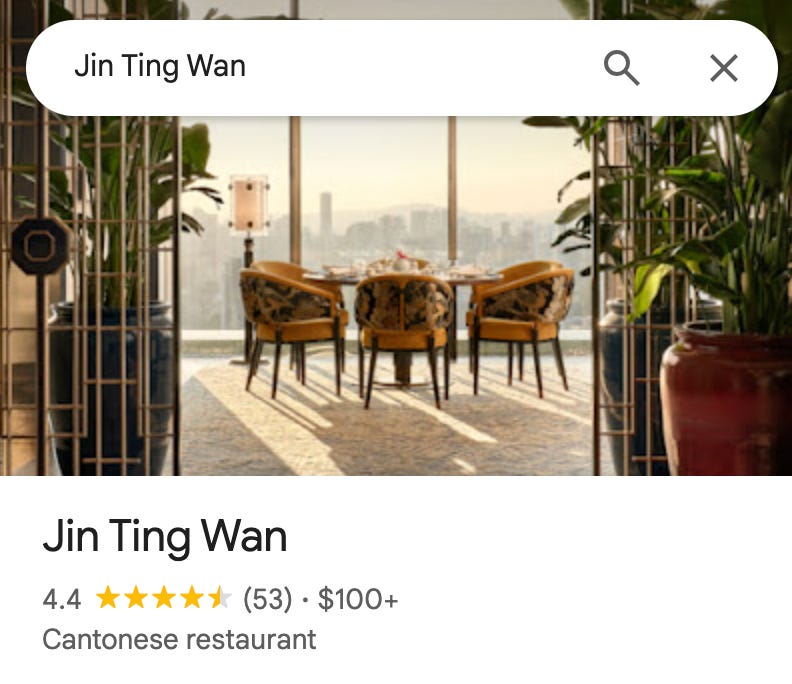
A visually stunning presentation from a new Marina Bay Sands restaurant sets expectations that are too high for the food to meet:
“With its no-expense-spared decor and prime National Day fireworks-level view, you can see where Jin Ting Wan is going. It’s aimed at the high-rolling, mostly non-local crowd, used to the trappings of top-ranked Chinese restaurants in the likes of Beijing, Shanghai or even Macau. But being in Singapore, it also attracts curious outliers like us – the kind with less money but more complaints. (...)
Eventually, though, you’re fed an amuse bouche. A single square of winter melon is presented like a piece of still art: pristine, slightly pickled, garnished with four pearls of caviar and a single pink flower petal. A hint of chilli. It’s presented with a proud flourish. Not sure if we’re supposed to clap.
4. “Do we order the house special beef set or a colonoscopy?”
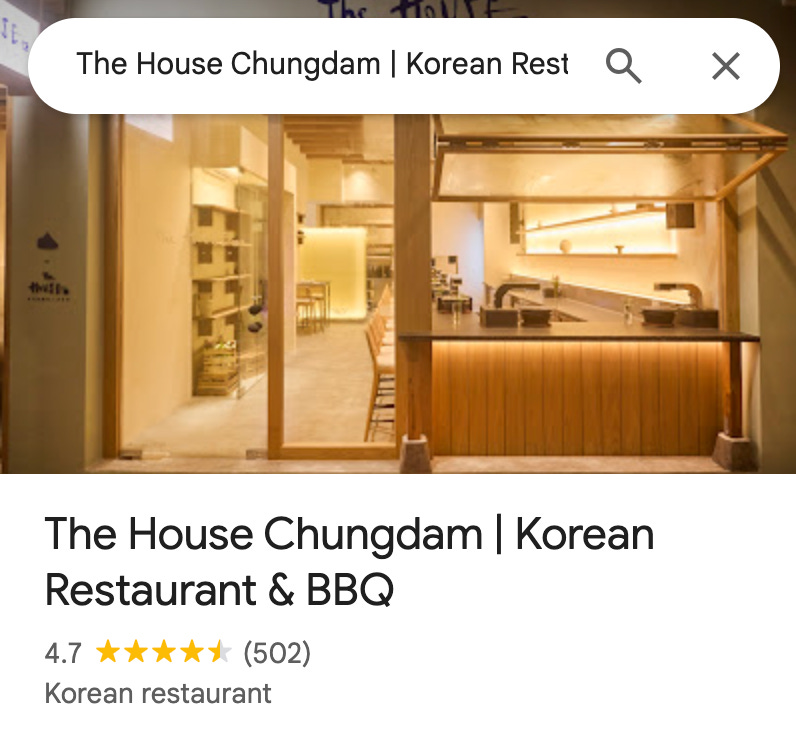
One of the unique selling points of this new Korean BBQ in Duxton Road is that someone grills your meat for you, so you don’t end up with carcinogenic lumps of charred protein because you were too engrossed in bitching about your boss to tend the fire. (...)
The decor is very simple, with plenty of space between tables. It’s also very bright. Operating theatre bright. Do we order the house special beef set or a colonoscopy? You don’t want to be in charge of the cleaning here. There is no way you can explain to the manager that you missed a spot because it was too dark to see the dirt. (...)
Compared to a good Japanese yakiniku, the price and quality of the meat don’t stand out… There’s a marinated version (S$49) but we have an aversion to oxidised greyish meat in a sweet sauce so we prefer everything au naturel.
3. “It’s as if chefs from Jumbo’s more-forgiving kitchens were given the directive to go upmarket, causing some mental short-circuitry in the process.”
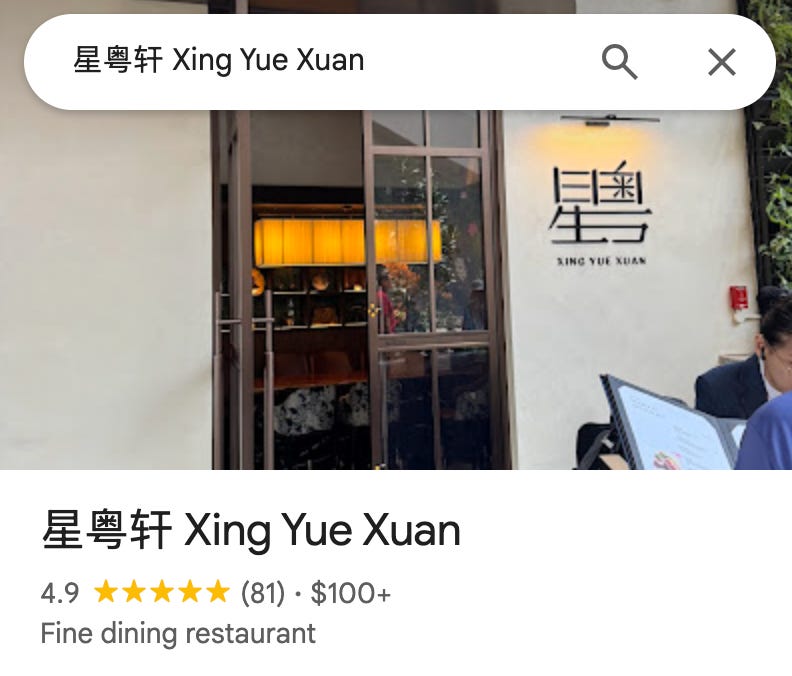
Jumbo’s new and more upscale seafood restaurant offering draws a mixed reception:
It’s designed to be posh Cantonese with some modern touches, but its finesse is sporadic. It’s as if chefs from Jumbo’s more-forgiving kitchens were given the directive to go upmarket, causing some mental short-circuitry in the process. They try a little too hard, with shaky attempts at innovation and a “more is more” approach to seasoning and preparation. (...)
But the steamed version disappoints, with the less-than-fresh crabmeat unable to hide in a steamed egg custard covered by pumpkin broth, with two pie tee shells on the side looking like they were told to show up to offer moral support.
2. “Of course, it says something about PS Cafe if the best thing about it was the fries.”
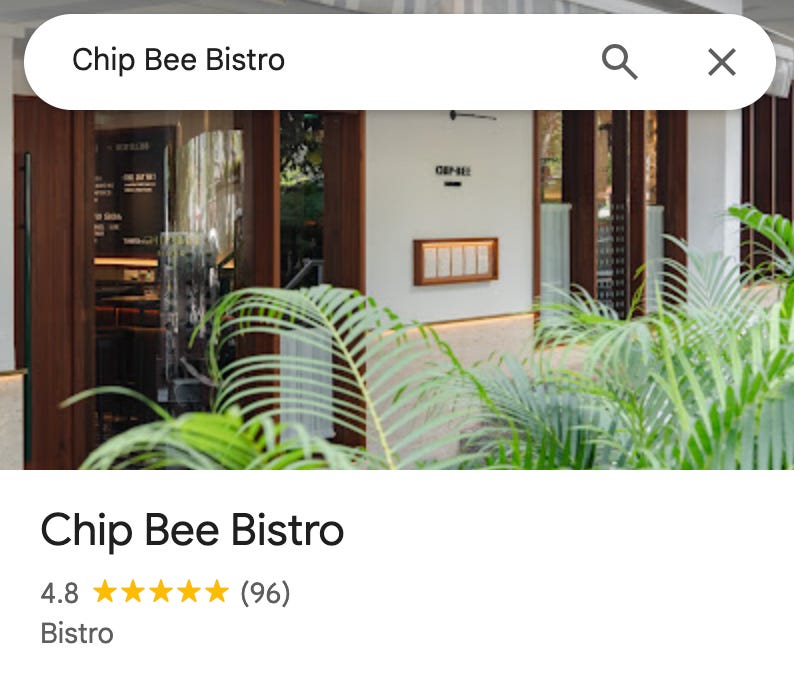
This review of the Chip Bee Bistro comes with some drive-by criticism for its closest comparison, PS Cafe, as well as its Holland Village locale:
Of course, it says something about PS Cafe if the best thing about it was the fries. That is, the food always played second fiddle to the ambience. You still get very good fries at Chip Bee Bistro – albeit without the truffle oil – but the menu is basic cafe fare. Nothing fancy, just familiar and passable cooking meant for mindless grazing as you linger and shoot the breeze with pals like you did decades ago. (...)
Teo doesn’t reinvent the cafe wheel with Chip Bee Bistro – he just rinses and repeats what worked in the past. He’s not so much running a restaurant as he is offering a lifestyle choice with snacks included. It’s a neighbourhood joint in a neighbourhood we wish we could be a part of.
It’s a taste of what Holland Village should, and used to be. And if the stars could get their act together to align, it could still be.
1. “In your state of hazy sun-addled stupor, you wonder if maybe your efforts to get in are commensurate with their efforts to keep you out.”
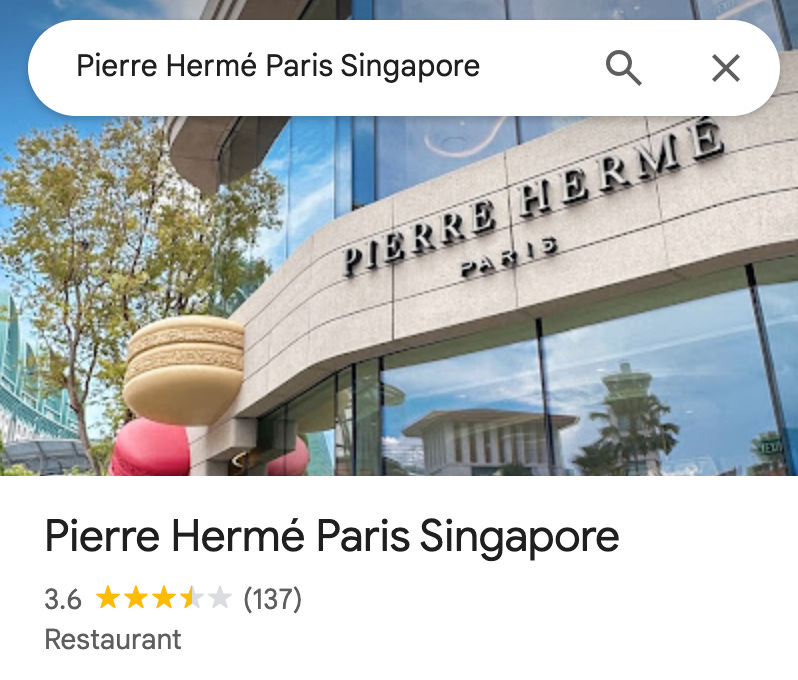
By the time I read this review of Table at Pierre Herme, I’ve come to the conclusion that when Jaime says a restaurant is a “work in progress”, that’s the diplomatic way of saying “not good”.
The line is long, but the shoppers inside are few. Booking a table at the restaurant is even harder, with a constant stream of unavailable dates for weeks on end. It’s either a sadistic French thing, or the folks behind Pierre Herme are taking crowd control to the extreme.
But, armed with a lot of patience, you’ll find enough pleasures at this diabetes-warning-ahead temple of sugary gastronomy.
Honourable mention: Jaime Ee’s thoughts on the Michelin Guide Awards in 2025
If you’ve followed any food journalism at all in 2025, you’ll likely know that this year’s Michelin awards drew a very mixed reception, something that Jaime sums up like so:
You know something’s not quite right when you get invited to a party and the host doesn’t even show up. (...)
Notably missing was the guide’s international director Gwendal Poullennec, who nonetheless had prepared a pre-recorded video lauding the culinary excellence of Singapore’s restaurant scene, while also making the right noises about the challenges the industry is facing.
While it’s not the first time he didn’t make a personal appearance in Singapore, there was an air of “sorry, I couldn’t make it, but enjoy yourselves anyway” blaseness about his absence. It was a vibe that continued throughout the evening, which could go down as the guide’s snooziest, phone-it-in performance since it made its grand debut in 2016.
Images: Google Maps
Some absolute zingers in this piece. I love it!
You have made some very salient points, thanks for the piece. Then again, wait till you read The Food Dossier (www.thefooddossier.com), it makes Jaime look like a complete choir boy.